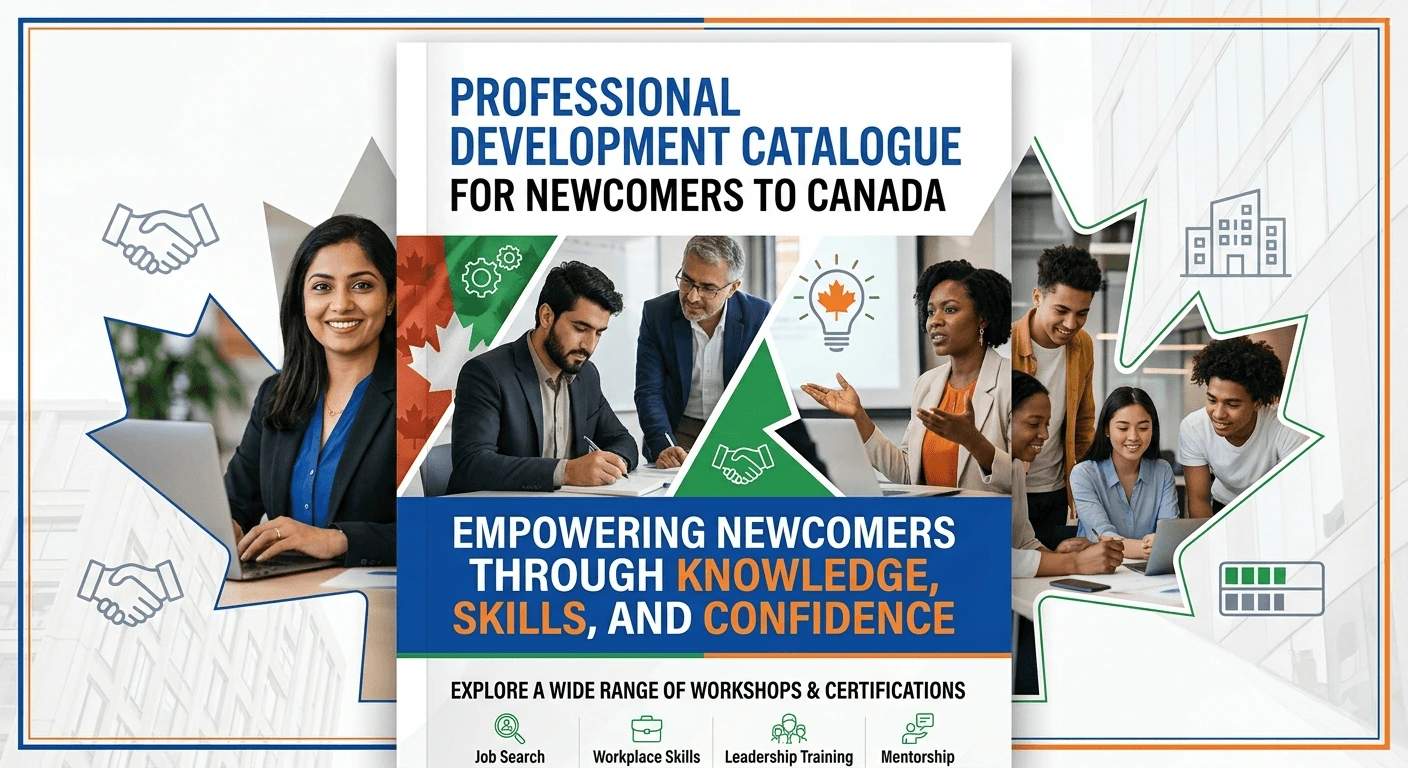
WORKSHOPS FOR NEWCOMERS TO CANADA
VIEWS
96
Price
$299.00
Search Keywords : human service agency staff training Canada
About Workshop
Menttora: Academy for Professional Development
Empowering Newcomers & Service Providers Through
Skills, Integrity, and Excellence
Overview
Starting a new life in Canada involves much more than
finding employment—it requires understanding Canadian laws, rights,
responsibilities, workplace expectations, education systems, financial
literacy, and community life. Menttora: Academy for Professional Development
provides practical, evidence-informed workshops designed to help newcomers
successfully integrate into Canadian society while protecting their rights and
maximizing their opportunities.
To support the frontline staff who guide these transitions,
we offer comprehensive human service agency staff training Canada
initiatives. Our programs deliver high-impact human services professional
development Canada tailored specifically for professionals and
organizations working in settlement agencies, multicultural centers,
non-profits, healthcare, municipalities, and community services.
Our evidence-informed social service staff training
Canada modules are customized to meet the distinct operational needs of
your organization. As part of our human service workforce training programs,
all offerings support sustainable, high-impact professional development for
human service workers and community champions alike.
Course & Workshop Modules
Canadian Law, Rights & Responsibilities
- Understanding
Canadian Laws and Your Legal Rights: Introduces Canada's legal system,
the rule of law, the justice system, interactions with police, and
individual protections regardless of immigration status.
- The
Canadian Charter of Rights and Freedoms: Examines fundamental rights,
equality rights, freedom of expression, mobility rights, legal
protections, and their everyday applications.
- Human
Rights in Canada: Explores federal and provincial human rights
legislation, protections against discrimination, and pathways to seek
assistance.
- Employment
Rights for Newcomers: Covers employment standards, wages, overtime,
workplace safety, discrimination, harassment, wrongful dismissal, and
dispute resources.
- Tenant
Rights and Housing Law: Explains leases, security deposits, landlord
and tenant responsibilities, eviction procedures, rent increases, and
housing dispute resolutions.
- Family
Law in Canada: Introduces Canadian family law, including marriage,
divorce, parenting responsibilities, child support, domestic violence
protections, and family law services.
- Consumer
Rights in Canada: Teaches newcomers to recognize scams, understand
contracts, avoid fraud, protect personal information, and make informed
financial decisions.
- Navigating
Government Services: Guides participants in accessing federal,
provincial, and municipal services, including healthcare, taxation,
education, income supports, and community resources.
Employment and Career Success
- Understanding
Canadian Workplace Culture: Explores workplace expectations,
communication styles, teamwork, diversity, professionalism, workplace
ethics, and conflict resolution.
- Resume,
Cover Letter and Interview Skills: Focuses on Canadian-style
application materials, communicating skills effectively, interviewing
techniques, and building hiring confidence.
- Networking
for Career Success: Covers professional relationship-building,
effective LinkedIn usage, attending networking events, and expanding
career connections.
- Credential
Recognition and Career Planning: Teaches how foreign education and
credentials are assessed, explores licensing pathways for regulated
professions, and creates transition plans.
- Starting
a Business in Canada: Introduces small business registration,
licensing, taxation, business planning, financing, marketing, and legal
obligations.
Financial Literacy
- Managing
Money in Canada: Teaches budgeting, banking, credit scores, savings,
loans, debt management, online banking, and long-term financial planning.
- Understanding
Taxes in Canada: Explains Canada's tax system, annual filing,
available tax credits, benefits, and how taxes support public services.
- Avoiding
Financial Fraud and Scams: Details common scams targeting newcomers,
personal information protection, fraudulent job offers, identity theft,
and crime reporting.
Education and Family Success
- Understanding
the Canadian Education System: Details elementary, secondary,
post-secondary, and vocational systems, report cards, special education,
and graduation requirements.
- Parents'
Rights in Schools: Explains parental rights within Canadian schools,
teacher communication, supporting learning, special education supports,
and advocacy strategies.
- Helping
Children Succeed in Canada: Shares strategies to help children adjust
to Canadian schools, develop resilience, maintain cultural identity, and
succeed academically.
Health, Wellness and Community
- Mental
Health and Wellness for Newcomers: Discusses culture shock, stress
management, resilience, mental health resources, family adjustment, and
overall wellbeing.
- Building
Healthy Relationships: Explores healthy communication, family
dynamics, parenting, conflict resolution, gender equality, and recognizing
unhealthy relationships.
- Community
Safety and Crime Prevention: Provides strategies for personal safety,
crime prevention, emergency preparedness, cyber safety, and understanding
law enforcement's role.
- Digital
Literacy for Everyday Life: Builds essential skills in email usage,
online government services, digital banking, virtual healthcare, and
online safety.
Citizenship and Civic Participation
- Preparing
for Canadian Citizenship: Prepares participants for citizenship by
exploring Canadian history, government, geography, civic responsibilities,
and the application process.
- Understanding
Canadian Government: Explains how federal, provincial, and municipal
governments function, law-making, voting rights, and public participation.
- Volunteerism
and Community Leadership: Highlights how volunteering builds Canadian
experience, professional networks, leadership skills, and civic
engagement.
Professional Skills for Long-Term Success
- Effective
Communication Skills: Strengthens verbal, written, and interpersonal
communication skills for workplace, educational, and social settings.
- Conflict
Resolution Across Cultures: Examines cultural communication
differences, mediation techniques, negotiation skills, and respectful
dialogue in a multicultural society.
- Leadership
Development for New Canadians: Builds leadership capacity, confidence,
decision-making, emotional intelligence, and workplace/community
initiative.
- Artificial
Intelligence (AI) for Everyday Success: Explores practical AI
applications in job searches, resume writing, language learning, and
productivity alongside ethical considerations and privacy.
Specialized Workshops for Settlement Organizations
- Working
Effectively with Diverse Cultures: Builds cultural competence,
inclusive communication, unconscious bias awareness, and culturally
responsive service delivery for providers.
- Trauma-Informed
Support for Newcomers: Trains service providers on trauma-informed
approaches, compassionate communication, resilience-building, and
supportive practices.
- Building
Inclusive Communities: Focuses on diversity, equity, inclusion,
anti-racism, belonging, and practical strategies for welcoming
communities.
- Know
Your Rights: Practical Legal Education for Everyday Life: Delivers
practical legal knowledge covering police interactions, legal documents,
rights protection, legal aid, and housing/workplace rights.
Customized Training
At Menttora: Academy for Professional Development, we
recognize that every settlement agency, community organization, municipality,
and newcomer population has unique needs. Rather than delivering standardized
workshops, we design customized training programs tailored to your
organization's goals, client demographics, and community priorities.
Workshops can range from 90-minute seminars to full-day
or multi-day professional development programs and are available in
person, virtually, or in a hybrid format. Our
evidence-informed training combines practical knowledge, legal education, adult
learning principles, and real-world Canadian experience to empower both
participants and workforce leaders.
Frequently Asked Questions (FAQ)
Q1: Why is dedicated human service agency staff training
Canada important for settlement and community organizations? A:
Specialized human service agency staff training Canada equips frontline
workers, case managers, and volunteers with current knowledge regarding legal
rights, trauma-informed practices, and cultural competency. This ensures
organizations deliver high-quality, legally accurate, and compassionate support
to newcomer populations.
Q2: Who can participate in human services professional
development Canada offered by Menttora? A: Our human services
professional development Canada programs are designed for professionals and
teams within settlement agencies, multicultural organizations, municipal
support offices, healthcare providers, educational institutions, and non-profit
community groups.
Q3: What learning delivery formats are available for
social service staff training Canada? A: Our social service staff
training Canada modules offer flexible delivery options, including
in-person, virtual, or hybrid settings. Session lengths can be customized into
90-minute seminars, full-day workshops, or multi-day professional development
series.
Q4: How do these human service workforce training
programs address trauma and cultural diversity? A: Specialized
streams within our human service workforce training programs explicitly
cover trauma-informed care and cross-cultural communication. Staff learn
actionable techniques to support clients who have experienced major life
transitions, displacement, or cultural adjustment stress.
Q5: How does professional development for human service
workers improve long-term community integration outcomes? A: By
providing continuous professional development for human service workers,
agencies ensure their staff stay updated on evolving Canadian housing laws,
employment standards, system navigation, and emerging tools like AI. This
directly improves client advocacy, engagement, and successful long-term
integration outcomes.
Register for this Workshop
Fill in your details below to register for this workshop.